

Introduction
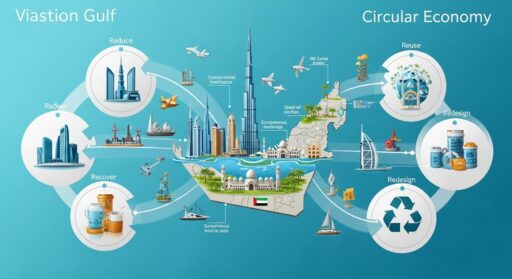
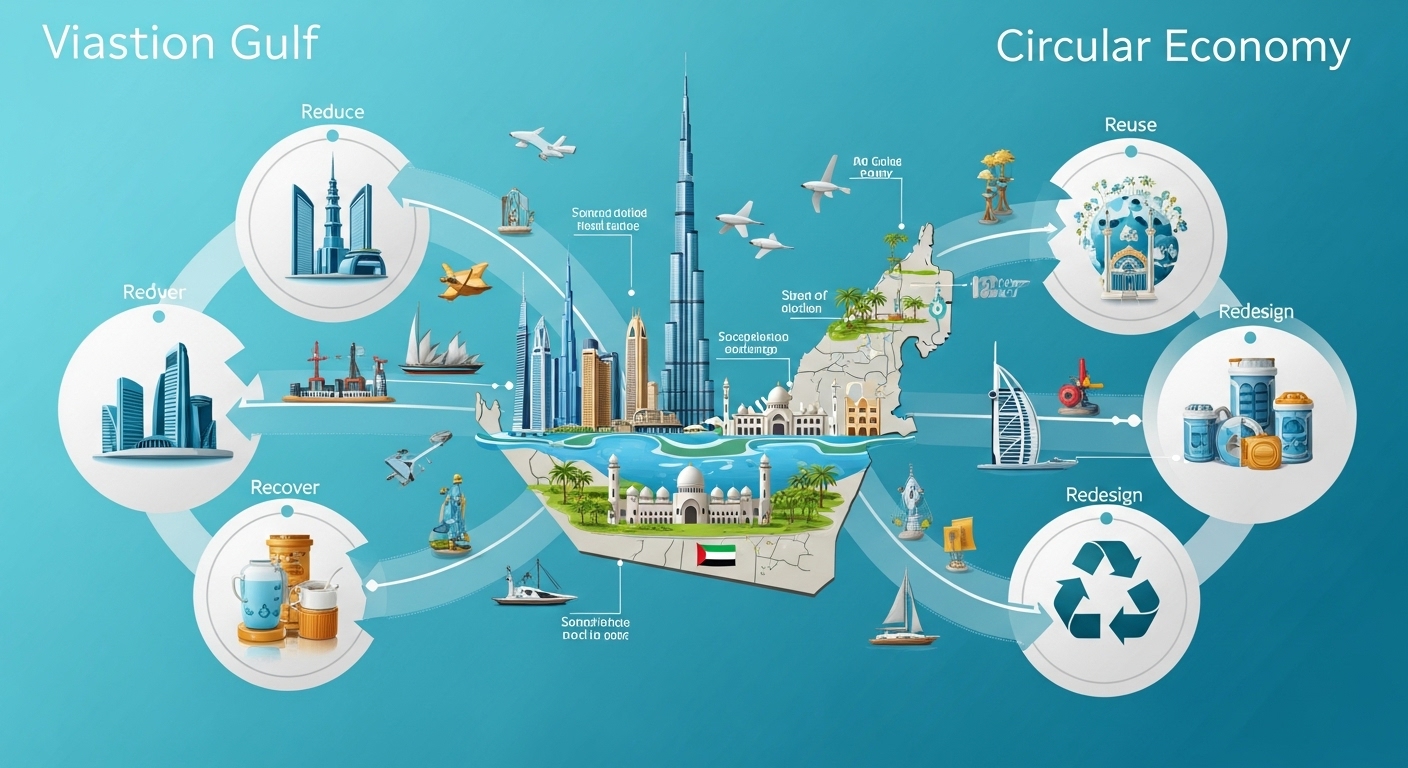
The linear “take-make-dispose” economic model is reaching its physical limits, even in a land of immense resources. Recognizing this, the United Arab Emirates is spearheading a regional transition towards a circular economy—a system aimed at eliminating waste and continually using resources. This vision represents a fundamental shift from managing waste as an end-of-pipe problem to designing it out of the economic system altogether. For the UAE, this is not just an environmental imperative but a strategic economic opportunity to create new industries, enhance resource security, and build a more resilient and competitive post-oil economy.
History
The UAE’s circular economy journey began with early waste management regulations and the establishment of recycling initiatives. The pivotal moment was the launch of the UAE Circular Economy Policy 2021-2031, which provided a comprehensive national framework. This was followed by emirate-level strategies, such as the Abu Dhabi Single-Use Plastic Policy and Dubai’s Integrated Waste Management Strategy. The UAE also played a key role in launching the Gulf Cooperation Council (GCC) Circular Economy Coalition, positioning itself as a regional leader in this transformative agenda. The nation’s hosting of COP28 further amplified its commitment, with the circular economy being a central theme of the conference.
Key Features
The UAE’s circular economy vision is built on several interconnected pillars:
- Sustainable Manufacturing and Production: Encouraging industries to design products for durability, repairability, and recyclability. This includes using more recycled content and exploring biomimicry and new materials that have a lower environmental footprint.
- Sustainable Transportation and Logistics: Promoting electric and hydrogen vehicles, optimizing logistics to reduce empty trips, and developing a circular economy for vehicles, including remanufacturing parts and recycling batteries.
- Sustainable Food Production and Consumption: Reducing food waste through better supply chain management and consumer education, and promoting urban farming and controlled-environment agriculture to use less water and land.
- Green Infrastructure: Mandating construction and demolition waste recycling, using recycled materials in building projects, and designing buildings for deconstruction and material recovery at the end of their life.
Cultural Significance
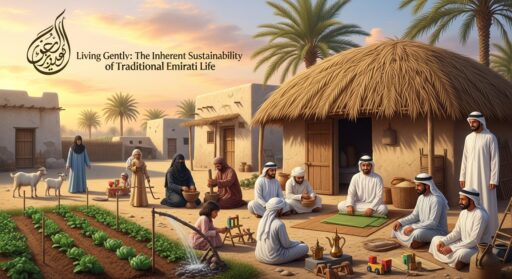
Adopting a circular economy requires a profound cultural shift from a society of abundance to one of mindful consumption. It calls back to the traditional Emirati values of resourcefulness and zero-waste, but scales them to a modern, industrial economy. The government is actively fostering this shift through awareness campaigns, encouraging a “reduce, reuse, recycle” mentality. For the youth, it represents a new frontier for innovation and entrepreneurship, with opportunities in areas like reverse logistics, material science, and remanufacturing. It is about building a modern identity that is both prosperous and responsible.
Modern Relevance
The circular economy is a key driver of the UAE’s economic diversification. It can reduce the nation’s dependency on raw material imports, create green jobs, and open up new export markets for secondary materials and green technologies. It also directly addresses environmental challenges like landfill overflow and marine plastic pollution. Major investments in Waste-to-Energy (WtE) plants, such as the Dubai Waste Management Centre, are a bridge technology, converting non-recyclable waste into electricity while the broader circular systems are built. The UAE’s ability to pioneer this transition in a hydrocarbon-rich region makes it a compelling global case study.
Conclusion
The UAE’s vision for a circular economy is one of its most ambitious and necessary projects for the 21st century. It is a conscious move to decouple economic growth from resource depletion and environmental degradation. By closing the loop on materials and energy, the UAE aims to create a regenerative economic system that is fit for the future. This transition from a linear to a circular model is more than a policy; it is a re-imagining of the very foundations of the economy, ensuring that the nation’s prosperity is built to last, in harmony with the planet’s finite resources.