

Introduction
Water security is the most fundamental and challenging pillar of sustainability in the arid United Arab Emirates. With minimal rainfall and no permanent rivers, the nation has had to engineer its own water cycle. The UAE’s strategy is a sophisticated, multi-pronged effort that spans from massive technological interventions like desalination to ambitious atmospheric manipulation like cloud seeding. This comprehensive approach is designed to ensure a reliable supply of fresh water for its growing population and economy, turning a historical vulnerability into a showcase of innovation and resilience.
History
The UAE’s modern water story began with desalination. The first commercial plants were built in the 1970s, and the sector has grown exponentially ever since, making the UAE a world leader in desalination capacity. However, the high energy cost and environmental impact of this process prompted a search for complementary solutions. The UAE began researching rain-enhancement science in the 1990s, and in the 2000s, the UAE Research Program for Rain Enhancement Science was launched under the supervision of the National Center of Meteorology (NCM), offering global grants to advance the field.
Key Features
The UAE’s water security strategy operates on several fronts simultaneously:
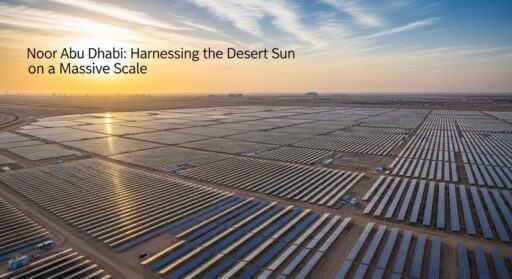
- Desalination Dominance: The backbone of the UAE’s water supply is desalination, primarily through thermal (Multi-Stage Flash Distillation) and more energy-efficient Reverse Osmosis (RO) technologies. The country is investing in solar-powered desalination to reduce the carbon footprint of this essential process.
- Cloud Seeding Program: The UAE operates one of the world’s most active cloud seeding programs. Aircraft equipped with specialized salt flare dispensers fly into promising clouds, providing nuclei around which water droplets can form and grow, potentially increasing rainfall by up to 30-35%.
- Water Treatment and Reuse: A massive network of sewage treatment plants reclaims wastewater, which is then used for irrigating parks, forests, and agricultural land. This “greywater” recycling is a cornerstone of conservation, preserving high-quality desalinated water for drinking.
- Demand Management: The government implements strict regulations for water use in landscaping, promotes water-efficient appliances, and runs public awareness campaigns to curb waste, recognizing that conservation is as important as production.
Cultural Significance
The national focus on water security is a modern continuation of an ancient struggle. The historical reverence for water, embodied in the shared community management of the aflaj systems, has been translated into a national, technology-driven mission. The ability to create water from the sea and potentially from the sky is a source of immense pride and a symbol of the nation’s refusal to be limited by its natural environment. It represents the ultimate triumph of human ingenuity over geographical constraints, a theme central to the UAE’s national narrative.
Modern Relevance
This multi-pronged strategy is critical for the UAE’s future. With one of the highest per capita water consumption rates globally and the pressures of climate change, innovation in water security is a non-negotiable priority. The cloud seeding program not only seeks to enhance local rainfall but also positions the UAE as a global center for atmospheric research. Investments in water grid infrastructure ensure that water can be moved from areas of production to areas of need. As the UAE pursues its Net Zero 2050 goal, decarbonizing the water sector through renewable energy is a key focus area, making the vital link between water and energy security.
Conclusion
The UAE’s journey for water is a story of turning scarcity into security through a relentless pursuit of innovation. From the massive industrial facilities on its coast to the specialized aircraft in its skies, the nation is deploying every available tool to secure its most precious resource. This integrated strategy—combining large-scale engineering, atmospheric science, and behavioral change—demonstrates a comprehensive and sophisticated understanding of the water challenge. It ensures that the UAE’s growth and prosperity will not be threatened by the aridity of its environment, but will be sustained by the ingenuity of its people.