

Introduction
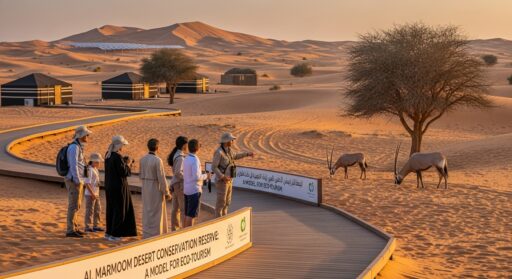
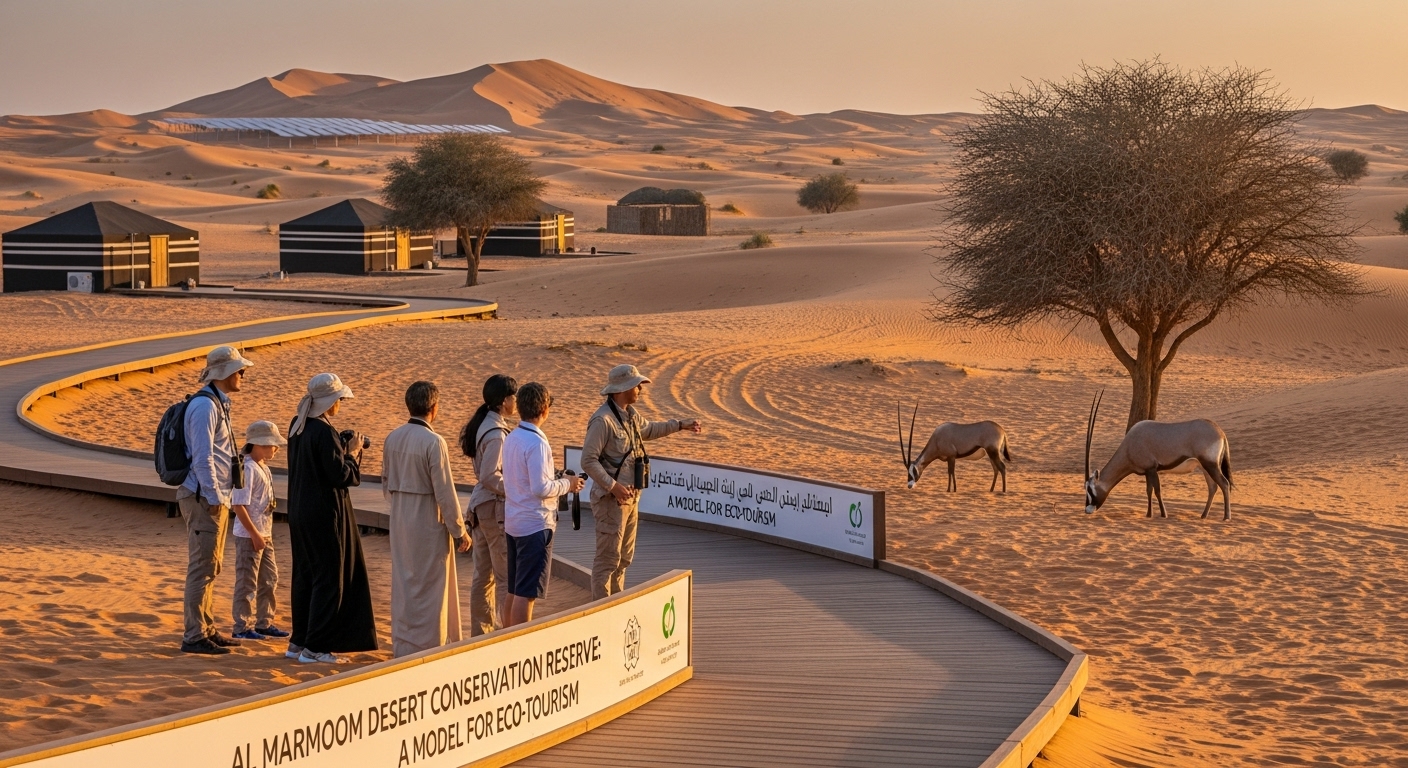
In the heart of Dubai’s desert landscape lies a visionary project that redefines the relationship between development and conservation: the Al Marmoom Desert Conservation Reserve. Spanning over 10% of the emirate’s total land area, it is the largest unfenced nature reserve in the UAE. Rather than being walled off from humanity, Al Marmoom is designed as a living laboratory for sustainable desert ecosystems, a haven for native wildlife, and a model for responsible eco-tourism. It represents a conscious effort to preserve the fragile desert environment while allowing people to experience, appreciate, and learn from it.
History
The reserve was formally established in 2018 under the directive of Sheikh Mohammed bin Rashid Al Maktoum, Vice President and Ruler of Dubai. The area, however, has long been of ecological and cultural significance, containing several key biodiversity hotspots like the Al Qudra Lakes, a man-made wetland that has become an unexpected oasis for migratory birds. The establishment of the reserve was a strategic move to protect this unique environment from the unchecked pressures of urban expansion and off-road driving, ensuring that a significant portion of Dubai’s natural heritage would be preserved for future generations.
Key Features
Al Marmoom is a multi-faceted initiative that integrates conservation, recreation, and education:
- Biodiversity Sanctuary: The reserve is home to over 204 species of native birds, 158 species of migratory birds, and 19 species of reptiles and mammals. It serves as a protected breeding ground for endangered species like the Arabian Oryx and the Sand Gazelle.
- Eco-Tourism Facilities: Instead of fencing the area, the reserve offers controlled access through designated facilities. These include the Al Marmoom Bedouin Experience, which offers cultural immersion, and the dedicated cycling tracks and running paths of the Al Qudra cycle path, which attract thousands of fitness enthusiasts weekly.
- Sustainable Practices: The reserve operates on principles of sustainability. The Al Qudra Lakes are filled with treated wastewater, providing a habitat for wildlife without draining precious freshwater resources. Strict rules govern visitor behavior to minimize human impact on the delicate desert flora and fauna.
- Cultural and Educational Hub: The reserve incorporates heritage sites like the Saruq Al-Hadid Archaeology Museum and offers educational programs for schools, connecting visitors to the region’s deep history and its fragile present.
Cultural Significance
Al Marmoom allows the people of Dubai to reconnect with the desert environment that is the bedrock of their culture. For a population that is overwhelmingly urban, it provides a tangible link to the Bedouin past, offering a space to experience the silence, vastness, and beauty of the desert. It fosters a sense of environmental stewardship among citizens and residents, transforming the desert from a blank space on the map into a valued and understood ecosystem. The reserve is a testament to a new kind of development—one that values natural capital as highly as economic capital.
Modern Relevance
As Dubai continues to grow, the Al Marmoom Reserve is a critical green (or rather, golden) lung. It plays a vital role in combating desertification, preserving groundwater, and maintaining local biodiversity. Its model of “conservation through use” demonstrates that environmental protection and economic activity (in this case, tourism) are not mutually exclusive but can be mutually reinforcing. The data collected on species adaptation and water management within the reserve provides valuable insights for other arid regions facing similar challenges. It is a practical implementation of the UAE’s commitment to the United Nations Sustainable Development Goals.
Conclusion
The Al Marmoom Desert Conservation Reserve is a bold and necessary project for the 21st century. It is a declaration that the desert is not wasteland to be paved over, but a precious, living ecosystem to be cherished and protected. By creating a space where wildlife can thrive and people can responsibly enjoy nature, Dubai has created a new template for urban conservation in arid regions. The reserve ensures that even as the city’s skyline reaches for the clouds, its roots will remain firmly planted in the sands of its ancient and beautiful desert home.